2
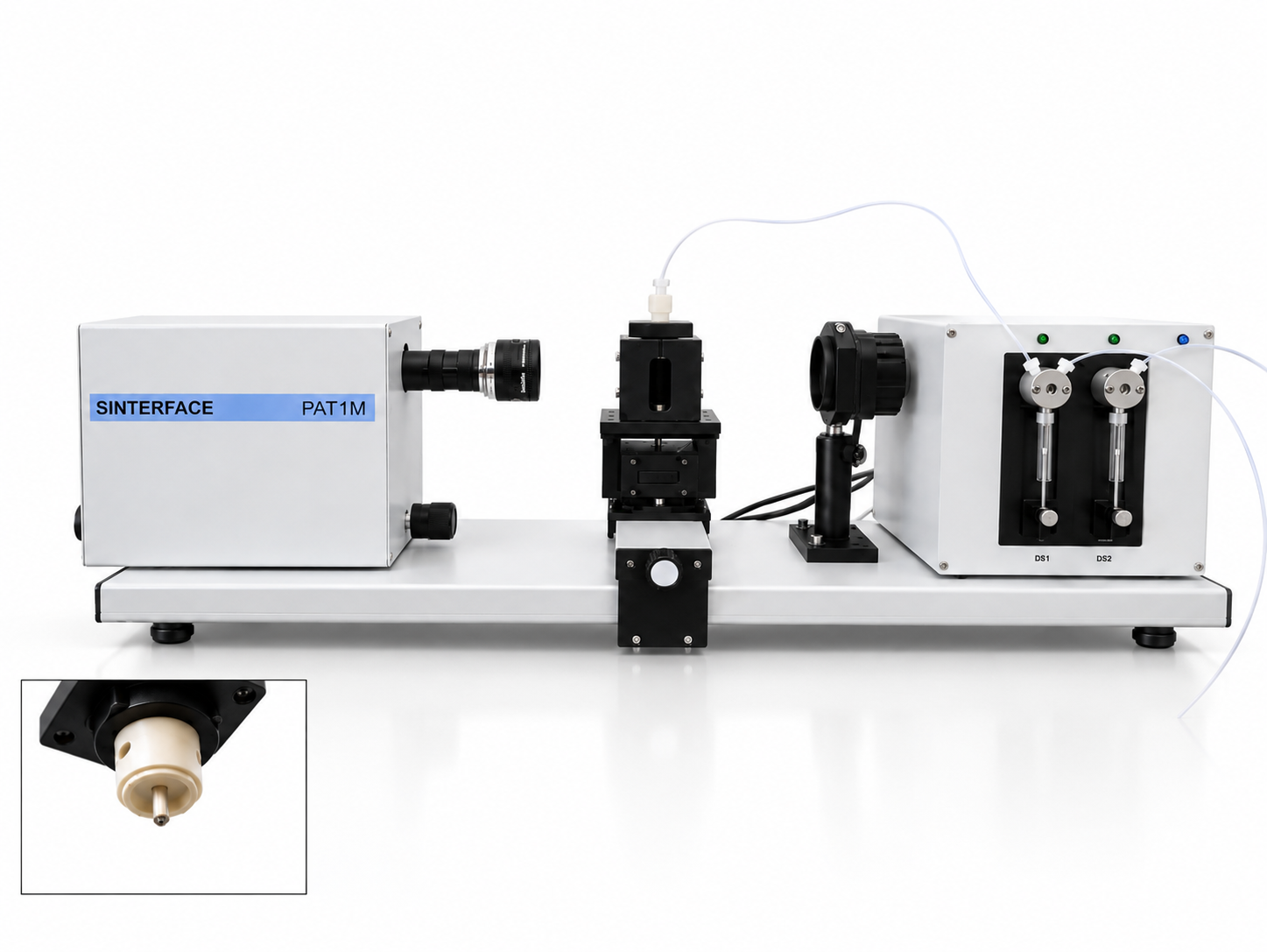
Independent syringes
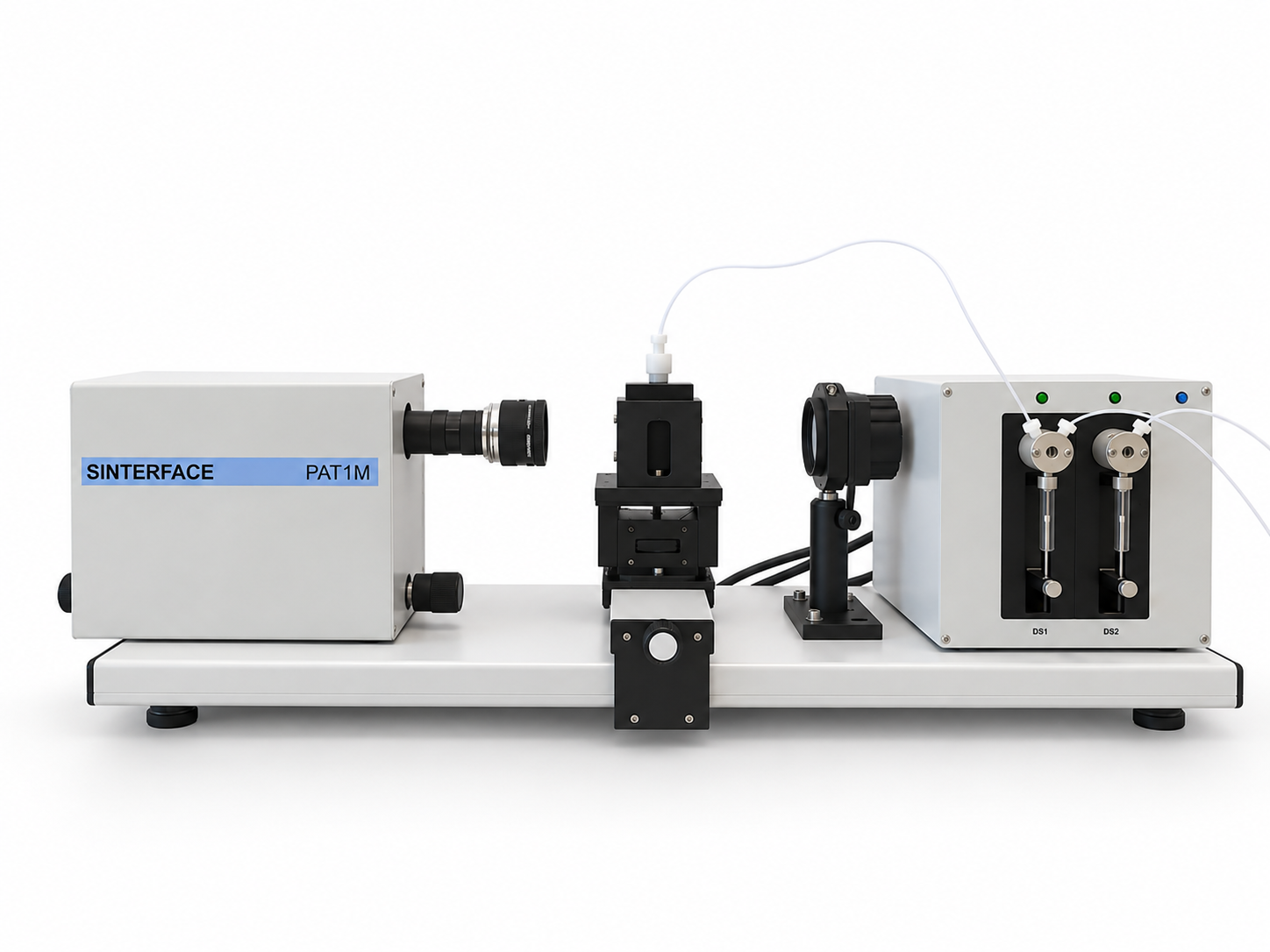
Two independently controlled syringes coordinate liquid injection and withdrawal through the coaxial capillary system.
Coaxial Capillary System
The CCS-1M extends the PAT-1M with a coaxial capillary system for controlled liquid exchange during pendant drop and buoyant bubble experiments. It enables dynamic surface and interfacial tension measurements while the surrounding liquid phase is continuously replaced.
2
Independent syringes
Continuous
Liquid exchange
PAT-1M
Compatible platform
The CCS-1M module
The CCS-1M is based on a coaxial capillary system with two independently controlled syringes. A pendant drop is first formed through the external capillary. During the experiment, the subphase can then be exchanged through the internal capillary while the PAT-1M continuously measures the dynamic surface or interfacial tension.
This unique approach enables in-situ liquid exchange without destroying the existing interface. Researchers can investigate adsorption, competitive displacement and interfacial dynamics under precisely controlled experimental conditions.
Measurement capabilities
Explore the experimental capabilities of the CCS-1M.
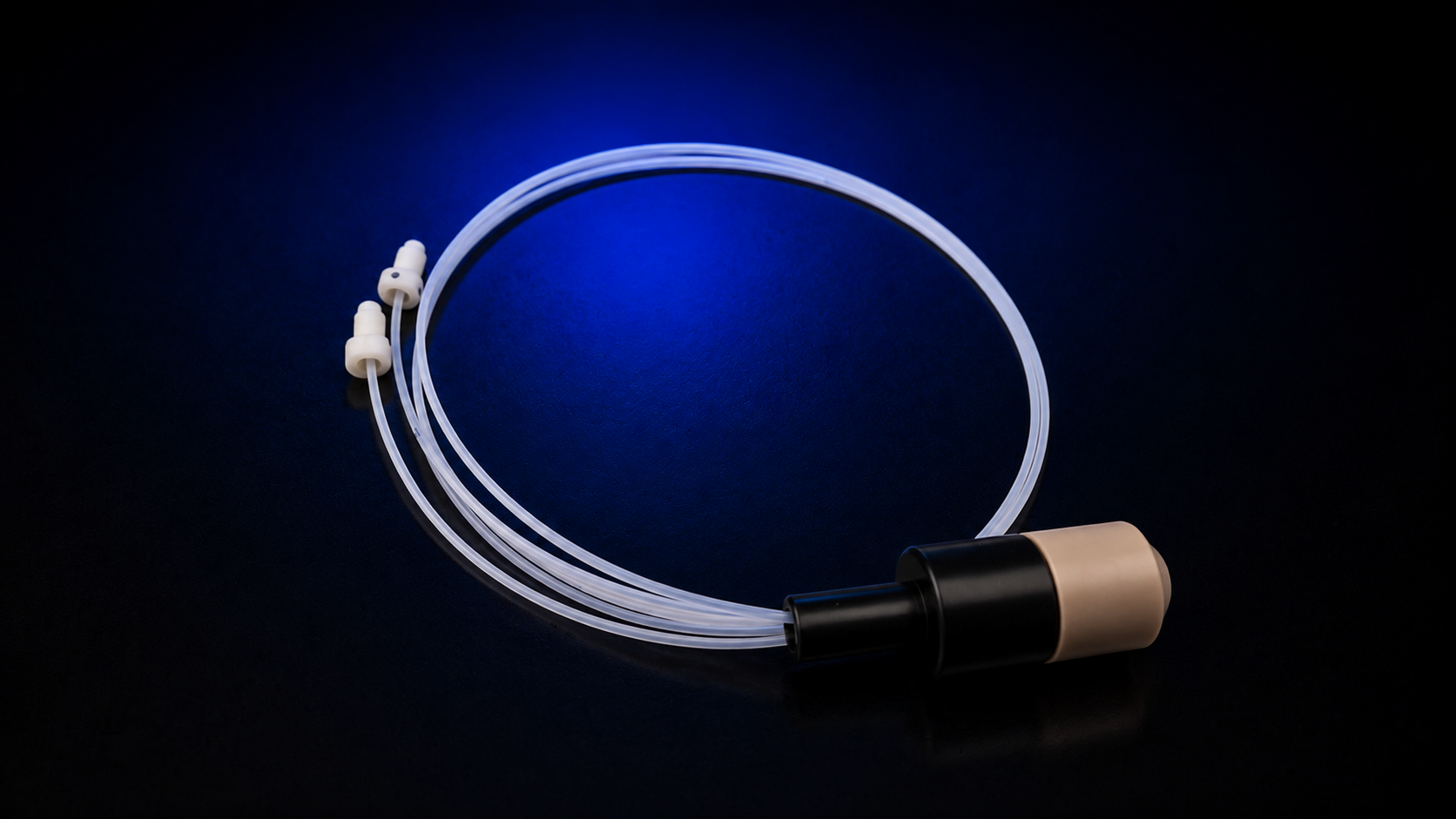
Combine an external and an internal capillary within one measurement head to form drops or bubbles and exchange the internal liquid phase during an active experiment.
Operate two syringes independently to coordinate liquid injection and withdrawal through the internal and external capillaries.
Replace the liquid inside a pendant drop or buoyant bubble while maintaining the existing interface and continuing the measurement.
Track dynamic surface or interfacial tension throughout the exchange process using the PAT-1M measurement and analysis system.
Define exchange volume, step size, time intervals and total experiment duration within the software timeline.
Combine liquid exchange with conventional oscillation experiments and area or volume control through the primary syringe.
Performance
Key operating parameters and measurement capabilities of the CCS-1M.
2
Two independently controlled syringes coordinate liquid injection and withdrawal through the coaxial capillary system.
In-situ
Replace the liquid inside a pendant drop or buoyant bubble without destroying the existing interface.
Program-mable
Define exchange volume, timing, step intervals and experiment duration directly within the PAT-1M software.
Continuous
Monitor dynamic surface and interfacial tension throughout the complete liquid exchange process.
Values may depend on configuration, measurement mode and optional modules.
Measurement principle
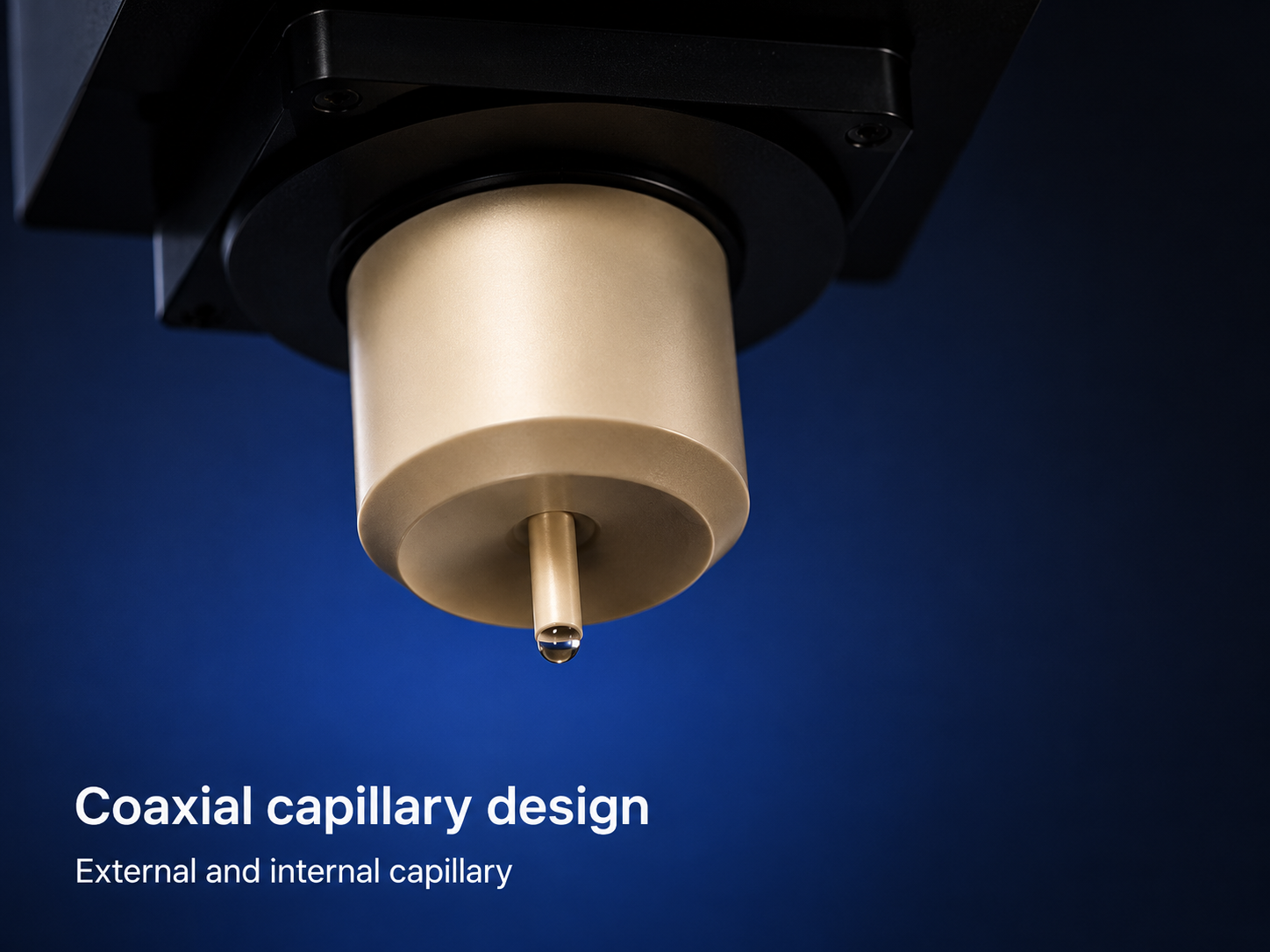
The CCS-1M is based on a coaxial capillary system consisting of an external and an internal capillary connected to two independently controlled syringes. A pendant drop is first generated through the external capillary. During the experiment, the internal capillary introduces a new liquid while the external capillary simultaneously withdraws the original subphase, allowing continuous measurements without disrupting the interface.
Capillary design
Coaxial double capillary
Experimental mode
In-situ liquid exchange
Scientific output
Adsorption & exchange dynamics
Compatible instrument
The CCS-1M is an integrated expansion module for the PAT-1M Profile Analysis Tensiometer. It combines coaxial capillary technology with automated liquid handling and optical drop analysis to enable controlled liquid exchange during ongoing surface and interfacial tension measurements.
Applications
The CCS-1M enables controlled liquid exchange during ongoing measurements, opening new possibilities for investigating adsorption, displacement and dynamic interfacial processes without disrupting the existing interface.
Scientific publications
Research
Publications and scientific references related to interface characterization.
The CCS-1M supports research on dynamic surface and interfacial tension, adsorption kinetics, competitive adsorption and controlled liquid exchange at preserved interfaces. Explore publications using the CCS-1M and related experimental methods.
Our publication database identifies verified studies performed with SINTERFACE instruments.
Technical information
Explore the measurement capabilities, hardware configuration, software functions and technical specifications of the CCS-1M Coaxial Capillary System.
Pendant drop experiments
Buoyant bubble experiments
Dynamic surface tension
Dynamic interfacial tension
In-situ subphase exchange
Coaxial capillary measurements
Programmable liquid exchange sequences
Oscillation experiments with liquid exchange
Coaxial double capillary
External capillary
Internal capillary
Dual syringe system
Control valve
Electronic control unit
PAT-1M interface
Independent syringe control
Liquid exchange parameter settings
Programmable exchange timelines
Automatic volume control
Surface tension monitoring
Experiment synchronization
Experimental data export
Coaxial capillaries
Dual syringe kit
Specifications may vary depending on configuration, software version and optional modules.
Downloads
Access operating instructions, technical documentation and supporting resources for the CCS-1M Coaxial Capillary System.
Additional manuals and software downloads are available through the SINTERFACE customer portal.
Visit download centerCCS-1M
Discuss your adsorption studies, liquid exchange workflows and experimental objectives with our specialists. The CCS-1M seamlessly integrates into the modular PAT-1M platform for advanced in-situ interface investigations.